Promote your Food Story

Promote your Restuarants or share your guide to Thai food and drink (FREE), please send your food article to ............


Mashimoroz

500 g beef shank or stewing beef, cut into chunks 1 1/2 liters ( 6 cups ) water 1 small cinnamon stick 4 slices galangal root 1 tablespoon crushed coriander roots 1 teaspoon salt 2 stalks lemongrass, tender inner part of bottom third only, bruised 4 kaffir lime leaves, torn into small pieces
------------------------------------------------------------------------
Garnishes

1 stalk celery, thinly sliced 6 letteuce leave, sliced 2 tablespoons freshly squeezed lime juice 3 bird's eye chilies, deseeded 2 springs coriander leaves, minced ---------------------------------------------------------------------------

 1 Bring all the ingredients to a boli in a stockpot or large saucepan over high heat, stirring to combine. Reduce the heat to low and simmer coverd for about 1 hour, until the beef is tender. 2 Stir the Garnished and simmer for 1 to 2 more minutes and remove from the heat. Serve hot.
Mashimoroz
2011 was a fantastic year of delicious Thai food!

There was street food of all kinds in abundance, the month long vegetarian Thai food challenge (by the way, we’ll be launching the all-new Vegetarian Thai Food Guide soon – mid January 2012), and of course there was plenty of durian.

Along with launching the Eating Thai Food Guide, I also figured out the secret ways to pick an outstanding restaurant before you eat there, and we also dined on some pretty exotic dishes at the annual Jay festival!

As a way to round-up 2011, I’ve picked a few of the best restaurants I ate at in Bangkok throughout the year!
Here are the top 11 Bangkok Thai food restaurant picks of 2011:


1. Tho Po Channa โต๋วโภชนา


Located just off Ratburana road in southern Bangkok, it’s a bit of journey to get there, but you’ll forget all of that as soon as you taste their outstanding dishes.

Order their Pla Chon Tod Lard Prik ปลาช่อนทอดราดพริก (deep fried fish covered in sweet chili sauce) and their Bpet Paloe เป็ดพะโล้ (soy sauce boiled duck).

The restaurant is only open for lunch from 11:00 – 14:00.


2. Lan Luam Dtai ร้านรวมใต้

Southern Thai food stole me heart this year… and I don’t plan on changing in the years to come. I can’t get over the spices and robust flavors that make up the cuisine of the southern portion of Thailand – I love it!

One of my top recommendations for southern Thai food in Bangkok is Lan Luam Dtai, located near Siriraj Hospital.


3. Areesaa Lote Dee อาอีซะฮ์ รสดี

Surprisingly situated just strides away from the un-Thai area of Khao San road, Areesaa Lote Dee is a hidden oasis that serves top-notch local style Khao Mok Gai (Thai chicken rice biryani).

Areesaa Lote Dee is delicious, wildly tasty.


4. Laan Thung Khao Tom Hua Pla ร้านตี้งข้าวต้มหัวปลา (ตลาดพลู)

Thai-Chinese dining is at an all-time high at this restaurant.
Their Pla Kahpung Neung Manao ปลากะพงนึ่งมะนาว (steamed sea bass in lime and garlic) is extravagant.
You won’t have a bad dining experience at Laan Thung Khao Tom Hua Pla.


5. Som Tam Boo Maa ส้มตำปูม้า

One of my favorite Isaan restaurants in Bangkok for a while now, Som Tam Boo Maa Restaurant did not fail to deliver extraordinarily tasty food through out the year.

This place makes grilled fish to perfection (as well as everything else I’ve ever eaten there).

Som Tam Boo Maa is located on Bang Khun Non, one of my favorite Bangkok street food hoods.


6. Kuang Sea Foods กวางทะเลเผา หูฉลาม

Delicious seafood at a decent price is what Kuang Sea Foods is famous for.

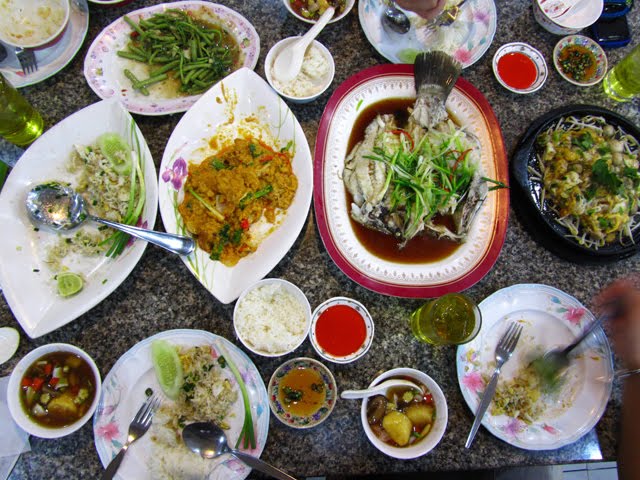
Try their Pla Kahpung Neung See Ew ปลากะพงนึ่งซีอิ๊ว (steamed fish in soy sauce) and their sizzling Or Suan ออส่วน (sizzling oyster omelet).


7. Lan Gai Baan Yang Kao Suan Kwang ร้านไก่บ้านย่างเขาสวนกวาง

It’s really the ambiance that I enjoyed about this place. The food is pretty good too.

They make their bangin’ som tam with peanut brittle, adding a nice touch of Thai style sweetness!

Lan Gai Baan Yang Kao Suan Kwang is a great restaurant if you are looking for a relaxing evening of food and fun.


8. Lan Kuay Jab Jaedang ร้านก๋วยจั๊บเจ๊แดง

After eating at this famous cluster of streets stalls at Bangkok’s Victory Monument for quite a few years now, it was finally time to put them to the test.

We knew they served FAST Thai food, but we didn’t know just how fast – so we timed them.

If you looking are looking for good Thai street food and a wonderful dining experience head over to Lan Kay Jab Jaedang.


9. Lan Loong Lui Restaurant ร้านลุงหลุยส์ (ท่าพระจันทร์)

Overlooking the Chao Phraya River and catering to the hungry students of Thammasat University, Lan Loong Lui serves a huge selection of wonderful Thai food that won’t let you down.


10. Su Ki Jeh Ru Yi Restaurant สุกี้เจหรูยี่

During the month long July vegetarian challenge, I was able to eat at quite a few veggie restaurants in Bangkok, and Su Ki Jeh Ru Yi was one of my favorites.

Though their menu is extensively vegan, you may be fooled by the delicious fake meats!


11. Baan Suan Pi บ้านสวนใผ่

A vegetarian food court may not be appealing to everyone, but as a lover of all forms of food (meat or meatless), I can verify that you won’t be disappointed at Baan Suan Pi.

Deliciously tasty plates of Thai vegetarian food for great prices. Don’t miss their grilled skewers of mushrooms, absolutely delicious!

SEE MORE : http://www.eatingthaifood.com
Mashimoroz


or my recent book review (http://www.dinemalaysia.com/foods_detail/131), I was looking at a book of Thai food inspired by the recipes and cooking of Thailand’s most beloved American, Jim Thompson.

Many people will have either visited JT’s house in Bangkok, been impressed by his silk business or heard the mysterious story of his disappearance on Easter Sunday when he took a stroll in the Cameron Highlands and was never seen again, but not many people will have realised (as I didn’t) that a big part of JT’s time in Thailand was given over to dinner parties.

The image couldn’t be more compelling: JT’s beautiful Thai house filled with curious antiques and even more curious people – actresses, diplomats, businessmen; the creme of Thai’s expat society jostled for an invite to his famous dinner parties. There, amid the candles and the light evening breeze, JT’s chosen guests would drink and eat a whole plethora of Thai dishes, from the traditional through to the westernized versions of local things, and put the world to rights.

This rather captured my imagination, and got me thinking back to all the (less extravagant) dinner parties I have attended, and how it is always the evening that takes centre stage. There is something about the ceremony of dinner parties – the matching cutlery, the candles, the excessive plates and courses – that makes the food taste even better and transforms it from a way to fill your belly to a sparkling social occasion. And yes it takes a lot of effort and leaves you with a mountain of washing up and a heavy head (if you indulged in the wine), but it is a far more enjoyable way to eat.

So next time you are planning a meal out with friends, why not plan to have a meal in instead? Yes you will have to cook (or persuade

someone else to) but you will avoid the rain and the traffic, you won’t have to spend too much money and you will get to spend a more laid-back evening in comfortable surroundings. Let us re-discover the delights of home dining!
Mashimoroz

THAI STREET FOOD

ISBN : 9781920989071
Author : THOMPSON, DAVID
Publisher : UNITED BOOK DISTRIBUTORS
Category : GENERAL COOKERY
Language : ENGLISH
Size(WxH) : 275 x 320 x 35
Weight : 3.01 Kg
Binding : HARDBACK
Number of pages : 370
Price : THB 2,295.00
Mashimoroz

Ingredients

1 lb of beef, cut into bite sized pieces
2 cups of coconut milk
1 cup, raw shelled peanuts

For the curry paste
3 tbs of very thinly sliced lemon grass
3 tbs of palm sugar
1 tbs thick soy sauce
2 tbss of garlic, minced
2 tbs dried red Thai chile peppers, crumbled
2 tbs of shallots (small red or purple onions), thinly sliced
1 tbs ginger, grated
1 tbs shrimp paste - gupi
1 tbs coriander seed
1 tbs cumin seed
pinch turmeric powder
quarter cup fish sauce - nam pla
1 tbs tamarind concentrate mixed with 3 tablespoons water


Method
1. Simmer the beef, and peanuts, in the coconut milk, in a covered saucepan for 30 minutes or until the beef is. tender .

2. Toast the coriander and cumin seeds until fragrant,
3. Make a well-blended paste out of the ingredients from fresh lemon grass to tamarind, either by pounding the chopped ingredients with a large mortar and pestle, or by pureeing them in a blender or food processor.

When the beef is tender
1. add the curry paste, stir to combine
2. continue to simmer, covered for 10 minutes.

Since the beef is simmered it is possible to use cheaper
(tougher) cuts of meat.
If necessary extend the cooking process until the meat is tender.

Serve with Thai Jasmine rice, and the usual Thai table condiments.

Thanks : http://www.simply-thai.com
Mashimoroz

Coconut Rice makes a deliciously easy side dish that can be served with a variety of dishes such as curries, stir-fried vegetables, plus fish and seafood mains. This easy coconut rice recipe is made in a rice cooker (for coconut rice made in a pot on your stove, see link within this recipe). All you need is some rice, coconut milk, water and salt! This coconut rice recipe also pairs beautifully with Indian food dishes. ENJOY! Prep Time: 5 minutesCook Time: 20 minutes
Ingredients:
MAKES 4 Servings2 cups Thai jasmine-scented white rice (note that other types of rice, such as brown rice, do not work for this recipe)1+1/2 cups thick, good-quality coconut milk (not "lite")2 cups water1/2 tsp. salt1/2 tsp. sugar
Preparation:
For Coconut Rice made in a pot on your stovetop, see my: Thai Coconut Rice Recipe (stovetop version). Place rice in rice cooker. Add the water, coconut milk, salt, and sugar. Stir well (use a plastic or wooden utensil to avoid scraping off the non-stick surface). Cover and set to cook. Once your rice cooker switches to "warm" mode, allow another 8-10 minutes for rice to finish "steaming". This will ensure your coconut rice is fully cooked and pleasantly sticky. Gently fluff with chopsticks before serving. Serve your coconut rice with other Thai dishes like: Best Thai Curry Recipes, OR Thai Fish and Seafood Recipes, OR Vegetarian Thai Food Recipes.. ENJOY

Many Thanks : Taste.com
Mashimoroz

This easy Thai Red Curry is fragrant and sumptuous, and can be made anywhere from mild to red-hot, depending on how much spice you prefer. It's a healthy and hearty curry dish that will awaken your senses and boost your mood. Note that in Thailand this curry would be simmered in a wok over a stovetop, but in this case I have adapted it to suit Western cooking methods so that it can be baked in an oven (easier for most North Americans). This means it can be put together and in the oven in under 20 minutes! ENJOY! Prep Time: 20 minutesCook Time: 1 hour, 00 minutes
Ingredients:
1/2 medium chicken, cut into parts (remove as much of the skin as possible)2-3 kaffir lime leaves (purchased frozen at Asian stores), OR substitute 1 Tbsp. lime juice1 cinnamon stick (OR substitute 1/2 tsp. cinnamon)fresh basil and coriander/cilantro for garnishRED CURRY SAUCE:1 can coconut milk 2 shallots OR 1/2 cup purple onion, sliced1 thumb-size piece galangal (or ginger)3 cloves garlic3 Tbsp. fish sauce1 Tbsp. chili powder1 Tbsp. ground cumin1 Tbsp. ground coriander2 heaping tsp. brown sugar2 tsp. shrimp paste (available by the jar at Asian stores)optional: 1 fresh red chili, minced, OR 1/2 to 1 tsp. cayenne pepper, OR 1/2 to 1 tsp. dried chili flakes VEGETABLES:1 red bell pepper, chopped2-3 tomatoes, sliced into wedgesoptional: 1/2 to 1 eggplant, chopped into bite-size pieces (leave skin on)
Preparation:
Preheat oven to 350 degrees. Place chicken pieces in a fairly large casserole dish. Place all curry sauce ingredients in a food processor or blender. Process well. Pour the curry sauce over the chicken. Stir well, so that each of the chicken pieces is covered with sauce. Add the kaffir lime leaves and cinnamon, mixing these into the sauce. Cover and bake 45 minutes at 350 degrees. Remove dish from the oven. Add the vegetables and stir them into the sauce. Return the curry to the oven for 15-20 minutes, or until chicken is well cooked. Do a taste test. If the sauce isn't salty enough, add more fish sauce (1 Tbsp. at a time). If it's too sour, add a little more brown sugar. If too spicy, add more coconut milk. If not spicy enough: add a few fresh-cut chilies or dried chili flakes/cayenne pepper. Dish the curry into a large serving bowl. Sprinkle generously with fresh basil and coriander/cilantrol, and serve with plenty of Thai jasmine-scented rice. ENJOY!
Thanks : thaifood.about.com
Mashimoroz

When the weather gets hot, there's nothing better than quick and easy cooking, with enough spice to get the blood flowing and the sweat pouring; and when the mercury climbs, look east to the foods of Thailand as a perfect antidote to the hot days of summer, when spending much time over a hot stove sounds like torture.

Thai spicy salads (yam) are made with just about anything you can think of, and are almost universally quick and easy to prepare, fresh tasting and very healthy…oh yeah, and very SPICY!!! Perfect hot weather food.

These dished are full of fresh and raw vegetables, minimal quantities of grilled meats and a simple spicy, sour and no fat dressing. Thai style yam is about as healthy as eating can get.

The recipe as follows is for a simple grilled beef salad, allowing you to prepare an entire meal without ever turning on the oven or range in an already overheated house. Beef can be substituted for chicken, pork, shrimp, fish, squid, boiled eggs…whatever you can think of! There may seem to be a lot of ingredients, but they are quite quickly chopped and mixed, and it's little different from composing a traditional western salad in technique.

Easy Yam Neua (hot and spicy Thai style beef salad)

1 lb of inexpensive yet flavorful steak - flank, rump or sirloin…or whatever you've got!

2 Tbls fish sauce

3 ½ Tbls lime juice (freshly squeezed!)

1 tsp sugar

2 cloves of garlic minced

The green part of 1 stalk of lemon grass (available at all Asian markets) very thinly shaved. It's tough, but when shaved finely, lends a crunchy and flavorful textural component to the salad

5-10 chopped Thai bird chilies (use more or less depending on your affinity for spice…usually better to start with less, and add more if needed!)

4-5 red shallots, thinly shaved

A couple of green onions chopped

½ cup of mint leaves; roughly shopped, or even better, simply plucked from the stalks

1/3 cup of cilantro, roughly chopped

2-3 not too ripe plum tomatoes cut in into quarters (you don’t want a juicy ripe tomato for this one)

1 peeled cucumber, also shaved thinly

Pre heat grill, and BBQ steak until medium rare, let rest for 5 minutes, and then cut across the grain into ¼ inch slices.

Make the dressing mixing the garlic, lemon grass, sugar, lime juice, fish sauce and chili in a bowl until homogenous and combined.

Add the beef to all the remaining vegetables and herbs, and toss with the dressing. Taste for salt, spice and sour, and add more fish sauce (salty) lime juice or chili as is needed.

Serve with plain jasmine rice, and with ice water, fresh fruit shakes, or cold lager beer, and enjoy a meal always ready to beat the heat!
Mashimoroz


Summer comes again so lots of people try to alleviate swelter. Many think of some cooling food like ice-cream, Nam Kang Sai (Thai dessert) another tasty Thai food with unique character, Kao Chae.
Now Kao Chae is catered both on roadside-shops and in restaurants. Kao Chae actually isn’t Thai food. It originated from the people of Mon, cooked to sacrifice Songkarn God. Making an original Kao Chae is a complicated procedure. “Kao Chae Sawei” or “Royal court Kao Chae” which we generally know nowadays is Kao Chae with jasmine water, it is served with side dishes which are fried shrimp paste and many color of boiled vegetable.
We called “Kao Chae Sawei” because the royal court attendant offer Kao Chae to King Rama V and it became one of his favorite dishes. After 1910, AD Kao Chae become well known widely in villagers and become special menu on Songkran day.
Momluang Neung Ninrat, the cook for King Rama V , she first brought recipe of Kao Chae to the ordinary thai society.
Secret technique, making Kao Chae become a specialty is the way jasmine water is made. We use jasmine to float on the water to give the water fragrant. In the past rain water is used but today mineral water is used instead. Water is kept in clay pot to keep it cool before wasn’t commonly used. Ice was used later on when it was made more easy to find.
Fried shrimp paste is the heart of Kao Chae. People will decide whose Kao Chae is best by tasting fried shrimp paste. We will eat Kao Chae with fried sweet pepper, sweet fish, salty beef, onion, and pork chop mix with fish. Moreover there are boiled vegetable such as cucumber, mango, goat pepper etc. to served with Kao Chae.
How to eat Kao Chae… Bring rice pour into jasmine water and add some ice. Have side dish first then follow with fragrant rice.
“Kao Chae” shows Thai culture of consuming which is artistic and neatly culture. Kao Chae is the Thai heritage so we, Thai people should conserve this culture for eternity.
Thai food has been accepted all over the world. It is deeply synchronized with the Culture. Kao chae is another wonderful and unique Thai food that has reasonable supports of its origins. It shows the cleverness of adapting to the hot and humid climate (like the Thai house).

Source : http://www.at-bangkok.com/articles_kaochae.php
Mashimoroz


This dish is always on the buffet table to make sure that you have vegetables you need for the day.

Ingredients:

2 Pounds assorted cut-up fresh vegetables: broccoli, green cabbage, fresh mushrooms, carrots, snow peas, baby corn, and zucchini
1 Teaspoon chopped garlic
1 cup chicken broth
2 tablespoons Emerald Stir-Frying Sauce
¼ teaspoon white ground pepper
2 tablespoons vegetable oil

How to Cook:

1 Heats the chicken broth in a large saucepan or wok. Bring to a boil.
2. Add fresh vegetables to the boiling broth. Stir and mix thoroughly. As soon as the broccoli and the snow peas change their color to bright green, remove them and the excess broth to a large bowl. Set aside
3. Heat vegetables oil I the same cooking pan, over high heat. Add garlic and vegetables and emerald Stir-Frying Sauce. Sprinkle with white pepper. Stir and mix one more time.
4. Transfer the vegetables to a serving platter. Serve hot, over steamed rice.

Source: Thai cooking by Alima Ravadi Quinn
Mashimoroz

Ingredient

Cooked Rice 60 gr
Prawn 30 gr
Squid 30 gr
Garlic 1 teapoon
Pepper 3-4 pinches
Vegetable oil 1 tablespoon
Baby corn (cut into small cubes ) 1 cob
Onion (cut into small cubes ) 1 teapoon
carrots (cut into small cubes) 1 teapoon
Spring onion (slices) 1 teapoon
Tomato (cut into small cubes)
Sugar 1 teapoon
Light soy sauce

How to Cook

1. Preparing your cooked rice in a bowl and add sugar, light soy souce and garlic onto cooked rice
2. Pour the oil into the wok at low heat and add seafood, later stir fry them until they are half cooked. Then add all vegetables and mix them.
3. Add the prepared mixture and combine well and cook for 2-3 minutes.
Mashimoroz
Thai food usually is very tasty. Aside from the main ingredients used in Thai cooking. Whether meat or vegetables, seasonings also play important role to enhance flavoring. Thus, one should keep in mind and become familiarized with all the key flavors prevalent in Thai cooking as described below.

SWEETNESS : The sweet taste found in Thai food is partly derived naturally from some of various meats used and partly by adding other sweeteners to further enhance the flavor. The key sweetening agent is, of course, sugar, of which comes in a variety of forms, including refined sugar, palm sugar, and brown sugar. As different kinds of sugars have varying levels of sweetness, the type of sugar used affects the overall flavor of food.

Refined sugar has a sharp sweetness and does not change the color of the food. Palm sugar, on the other hand, has a milder in sweetness and suitable for food containing coconut milk. When dissolved over the heat and added to Thai noodle dishes or even the Thai spicy casserole "Palo", palm sugar can improve the flavor as well as enhance the aroma of those dishes. Brown sugar, in powdered form, is suitable for certain kinds of food and sweet. Yet another kind of sugar namely palm sugar cakes, which are made from boiling palm sugar and ladled into chunks then left to dry.

SALTINESS : The saltiness in Thaifood is derived from fish sauce and salt. Fish sauce is added to main dishes not only for the salty taste but also for its unique aroma. Besides fish sauce and salt, soy bean sauce and other all purpose sauces are now used in Thai cooking, depending upon the dishes made or the preference of the cook.

SOURNESS : Most of the sourness comes from adding lime juice, tamarind juice, kaffir lime juice, or vinegar. The acid agents used in seasonings must be carefully chosen to compliment each dish. For instance, when making salad, lime juice should be used for its aroma. Tamarind juice has a sweet and sour taste, suitable for mixing with food containing palm sugar as a sweetener, in order to enrich the flavor of such dishes. Kaffir lime juice is used in certain dishes that require its aroma. When mixed with lime juice and used in hot and sour vegetable soup, it will greatly improve the flovor

SPICENESS : Most of the hot taste in Thaifood is mainly from Chilies. Fresh spur chilies are sliced and added to curries and stir-fried dishes to give color and spiciness. Dried spur chilies are also another essential ingredient to make the hot taste in Thaifood. Hot taste from chili also promotes the appetite.

Source :http://www.ezythaicooking.com/seasoning.htm
Mashimoroz
Start with Fresh Ingredients : In order to achieve the greatest taste sensation from your Thai cooking, be sure to start with fresh ingredients. Dried and packaged lemongrass, for instance, is hardly worth comparing to the fresh version (fresh lemongrass is available in all Asian shops and markets). When shopping at Asian stores, note that ingredients such as galangal, pandan, or kaffir lime leaves may be available only in the freezer section. Frozen herbs and spices are nearly as potent as fresh, and you’ll have the convenience of having them on hand in your freezer at home for future use. See Shopping for Thai Ingredients for more helpful shopping tips.

Have the Right Equipment : Thai cooking requires a minimum of cooking tools and utensils. The wok is the primary cooking tool (a deep frying pan is a good substitute), used with wooden spoons or “shovels” (spatulas) to stir-fry ingredients. A pestle & mortar made from stone or pottery is also commonly used for pounding and grinding spices and herbs. A food processor is the modern equivalent; however, I still find my pestle & mortar does a better job of grinding whole spices such as coriander (If you do not own this particular equipment, a coffee grinder also does an excellent job). I like to use my pestle & mortar to pound slices of lemongrass before putting them in the processor—this breaks down the hard fibers of the lemongrass, which are almost thread-like, making it easier to eat and even more fragrant. A rice cooker is an invaluable appliance to have when cooking up a Thai meal, making rice preparation quick and easy. However, a simple stainless steel pot with a lid will work just as well.

Find a Balance of Salty, Sour, Spicy, and Sweet : In Thai cooking, taste-testing is a complete necessity. Following a Thai recipe is a good start, but because tastes vary from person to person, you will need to find your own balance of seasonings with each dish you make. Here are some tips to help you achieve that balance:

To tone down a dish that is too spicy, add coconut milk or yoghurt. A little sugar may also diminish some of the fire.

To tone down a dish that is too salty, add lime juice, lemon juice, or tamarind water (made from a little tamarind paste mixed with water).

When you find a dish not salty enough, add fish sauce instead of salt—or soy sauce if you are vegetarian. This way you will get more flavor as well as the saltiness you’re seeking.

To sweeten Thai dishes, you can use plain white sugar, although brown sugar is closer to the rock sugar most Asian chefs use. Since I prefer not to use sugar in my cooking, I substitute with xylitol—a sweet, sugar-like ingredient that does not raise blood glucose levels (available at health food stores). This is also an excellent substitute for diabetics.

If you find your dish not sour enough, a little lime juice or tamarind water will suffice nicely (for tamarind water, see above).

Not spicy enough? That’s easy! Add more fresh (or dried) chillies, cayenne pepper, chilli powder, or a teaspoon of Thai chilli sauce (available in Asian stores).

Stir Frying Tips : The most important cooking tip I have learned in terms of Thai cuisine is this: make sure adequate time is taken to prepare all ingredients before heating up your wok or frying pan. In Thai cooking, preparation is everything. You’ll find that once all the necessary ingredients are sliced, ground, and ready to go, the actual cooking time required is minimal. Most Thai stir-fries (including many noodle dishes) are cooked at high heats and for only a few minutes, which is what makes them particularly fresh, delicious, and nutritious. When stir frying, start with a well-oiled wok. Spread a good frying oil (like sunflower or canola) around your wok, including up the sides. Add ingredients when the wok is hot so that not too much oil will be absorbed by the food. When the wok gets too dry, I add a little water, broth, or cooking wine instead of more oil. This is a healthier option and works just as well. Add 1 to 2 tbsp. at a time as needed.

Stir-frying Rice : To achieve restaurant-quality stir-fried rice, it's important to start with left-over boiled or steamed rice - preferably at least 2 days old. It should be fairly dry and hard to the touch. To achieve this type of rice in a shorter time, place a pot of cooked rice in the refrigerator with the lid off. When you're ready to fry the rice, first pour a tablespoon or two of oil into the rice and work it through with your fingers, gently separating the grains. This will make the rice nice and fluffy once it's fried - plus this way it won't clump or stick together.

Stir-frying Vegetables : Stir fried vegetables are done when the colors are enhanced (bright green for broccoli). Do not overcook, as this is one of the greatest health benefits of Southeast-Asian foods - the fact that vegetables retain most of their essential nutrients.

Source : http://thaifood.about.com (Author : Darlene Schmidt)
Mashimoroz
Bangkok offers local and international cuisine you find the restuarant lists to make your choice where to wine and dine.

A GARDEN

A house decked out in Victorian style fronted by a lush garden for al fresco dining.
Style: European
Tel: 0-2260-4992 Address: 64 Sukhumvit Soi 51, Bangkok 10110
........................................................................................................................................................
A L'ETAGE

Located in a small complex of shops and eating places, shaded by trees and plants, this cosy restaurant has a Parisian ambience with its comfortable seating and chic decor.
Read an overview
Style: French
Tel: 0-2662-6336 Address: 28-28/1 Sukhumvit Soi 39, Bangkok 10110
........................................................................................................................................................
AMAPOLA

Amapola is a gem of a tropical mini-resort with a garden terrace, comfy dining room and a chic and breezy poolside bar.
Style: Japanese
Tel: 0-2258-7077 Address: 72/1 Sukhumvit Soi 51, Bangkok 10110
........................................................................................................................................................
ANTONIO'S
Small but cosy, wood, black granite and marble set the decorative tone while soft
lighting defines the ambience.
Style: Italian
Tel: 0-2258-4247, 08-1733-9073 Address: 59/1 Soi Sawasdee, Sukhumvit Soi 31, Bangkok

10110
........................................................................................................................................................

ATHENA

Mustard-coloured walls cloister rooms offset with white pillars, lending a Greek look and
feel to this neat, tidy establishment. Evocative Greek ballads, candle-lit tables and
displays of flowers and souvenirs create a tranquil mood.
Style: Greek
Tel: 0-2392-7644 Address: 594 Soi Ekamai, Sukhumvit Soi 63, Bangkok 10110
........................................................................................................................................................

BACCO

A large place decked out with paintings of clowns and Bacchus, the greek god of wine, the
restaurant exudes a light and fun atmosphere.
Style: Italian
Tel: 0-2662-4538 Address: 535/1 Sukhumvit Soi 53, Bangkok 10110
........................................................................................................................................................

BASIL

Hip, stylish designing makes this small, modern restaurant the place to unwind amid a
colour scheme of white, black and golden. One wall displays Thai lacquerware. Dining
tables include hammered-chrome tabletops. Big plants and a wood floor lend simplicity to
the ambience.
Style: Thai
Tel: 0-2649-8366 Address: SHERATON GRANDE SUKHUMVIT, 250 SUKHUMVIT ROAD, BANGKOK 10110
........................................................................................................................................................

BASILICO

Managing director Sergio Forte, from Rimini on the Adriatic, has borrowed a building
design often seen in his home region whereby copious glass allows diners to feel almost
out of doors. Actual outdoor seating is available as is a semi-enclosed area where
smoking is permitted.
Style: Italian
Tel: 0-2662-2323 Address: 8 SUKHUMVIT SOI 33, BANGKOK 10110
........................................................................................................................................................

BECCOFINO

Beccofino's distinctive facade of louvred panels directly fronts Soi Thonglor, while
inside the main dining room as well as smaller seating areas s t off by archways are
enhanced with an understated interior featuring copper, white brick and rich wood accents.
Style: Italian
Tel: 0-2392-1881-2 Address: 146 Soi Thonglor, Sukhumvit Soi 55, Bangkok 10110
........................................................................................................................................................

BED SUPPER CLUB

Space-bubble fantasy meets ultra-chic restaurant. Dining area with white glow allows you
to pose on large bedstyle seating.
Style: International
Tel: 0-2651-3537 Address: 26 Sukhumvit Soi 11, Bangkok 10110
........................................................................................................................................................

BEI OTTO

In its 22nd year, Bei Otto continues to be one of Bangkok's favourite German eating-
houses with a genuine Black Forest feel to it.
Style: German/European
Tel: 0-2262-0892, 0-2260-0869 Address: 1 Sukhumvit Soi 20, Bangkok 10110
........................................................................................................................................................

BELLA NAPOLI

Small, funky and intimate, this is a place for a casual break to enjoy some fast Italian
food while cruising Sukhumvit Road. Santanastyle music ricochets off walls adorned by
small photographs and memorabilia, which bestow a neighborhood friendliness to the room.
Style: Italian
Tel: 0-2712-5422, 0-2259-0405 Address: 3/3 SUKHUMVIT SOI 31, BANGKOK 10110
........................................................................................................................................................

BLUE SPICE

Blue Spice has a modern, coffee shop-style setting with clean white walls accented by a
wooden backdrop.
Style: International
Tel: 0-2365-8487 Address: 304 Sukhumvit Soi 55, Bangkok 10110
........................................................................................................................................................

BOURBON STREET

The only place in town to find cajun/creole cuisine, Bourbon Street with its rattan
furniture, decorative New Orleans memorabilia and orange-washed walls conveys a
Louisianan flair.
Style: Mexican/Creole/Cajun
Tel: 0-2259-0328-9 Address: Washington Square, 29/4-6 Sukhumvit Soi 22, Bangkok 10110
........................................................................................................................................................

BRIDGE

A stunning, geometric glass structure houses this modern and elegant eatery. the club-
style ambience looks to attract a trendy crowd.
Style: Italian
Tel: 0-2258-1590Address: 26 Sukhumvit Soi 20, Bangkok 10110
........................................................................................................................................................

CAFE BUONGIORNO

Set in a beautiful house, this cafe-like restaurant offers seating in air-conditioned
comfort or al fresco in a lush garden.
Style: Italian
Tel: 0-2662-3471 Address: 22 Sukhumvit Soi 33, Bangkok 10110
........................................................................................................................................................

CHESA

Set in a large house and decorated with upholstered benches, chairs and tables with red
and white tablecloths, Chesa exudes a cosy Swiss charm. Style: Swiss
Tel: 0-2261-6650 Address: 5 Sukhumvit Soi 20, Bangkok 10110
........................................................................................................................................................
CHI

An eclectic, fanciful, avant-garde restaurant with animals and flowers painted on the
wall and a mounted, stuffed, white-feathered bird on display. Various rooms have unique
decor including overlapping, empty picture frames, slices of mirrors, feathered boas and
other zany items.
Style: International
Tel: 0-2381-7587/9 Address: H1, 998 Soi Thonglor, Sukhumvit Soi 55, Bangkok 10110
........................................................................................................................................................

CHINE CHINE

Chic and chi-chi, Chine Chine is a modern Cantonese restaurant on the second floor of the
hip haven of Bangkok's young professionals, J Avenue. Stylish Victorian meets with modern
Chinese interior decorated with oversized chairs and crafted-tile wall in a modern pattern.
Style: Chinese
Tel: 0-2712-6541-2 Address: 2ND FLOOR,J AVENUE, SOI THONGLOR 15,SUKHUMVIT SOI 55,BANGKOK 10110
........................................................................................................................................................

COFFEE BEANS BY DAO

This Thai-style brasserie located in Ruamrudee Village has a relaxed family dining
atmosphere with seating on three floors.
Style: Thai/International
Tel: 0-2254-7780, 0-2254-7117 Address: 20/12-15 Ruamrudee Village, Soi Ruamrudee, Bangkok 10330
Mashimoroz

Rice comes in many different forms. There is long and short grain rice and it can be white, brown, red or black in colour.

Plain Rice is most popular in central and southern Thailand. To cook it, for every single measure of water to a boil. Boil the water until the rice is soft on the outside but until hard in the centre for about 10-15 minutes. The time will vary depending on how much rice being cooked. Put the lid on the pan, turn the heat right down and let the rice cook until the water has evaporated for 5-10 minutes. If the rice cook on the top is cooked, then all the rice in the pan will be cooked as well. Once all the water has evaporated care must be taken not to burn the rice at the bottom of pan.

Sticky or Glutinous Rice is different grain of rice from plain rice and its eaten mainly in the north and north-east of Thailand. It is eaten using your hands. The sticky rice needs to be soaked in water for before it is cooked.


Drain the water out of the sticky rice and put the sticky rice into the top part of a steamer. If the steamer has big holes in it, then put a muslin cloth in the steamer first, to stop the rice falling thought the holes. Then bring the water in the bottom part of the steamer to the boil. When you can see steam coming through the sticky rice then put the lid on the rice and if it is not hard in the middle it is cooked. If the middle of the rice is still hard then you need to replace the lid another few minutes.


Once it is cooked turn the heat off and put the sticky rice onto a tray or place. Use a spoon to move the rice around to get rid of all the hot steam. If you do not do this, the sticky rice will go soggy.

The sticky rice is then ready to be eaten. It can also be kept to eat later in the day.


Roasted Ground Sticky Rice used to be used in curried and stir-fries to make the sauce thicker instead of tapioca flour or corn flour. It is still used in some dishes today to give the sauce a thicker texture.

To make roasted, ground sticky rice, put some grains of sticky rice into a wok over a low heat and roast until they become a brown color. Then put the roasted sticky rice into a mortar and pound well with a pestle until it becomes a powder.


Source : PASSION FOR THAI COOKING, A

Mashimoroz


Green papaya salad is the most popular dish among women in Thailand according to a survey I heard on TV there. It is a Northeastern food that is eaten with sticky rice and other Northeastern dishes such as laab, beef salad and bamboo shoot salad.

The two most popular types of green papaya salad have either dried shrimp or salted crab. Green papaya salad with dried shrimp and peanuts is called som tum thai. The green papaya salad with salted crab is called som tum pbooh. The majority of the ingredients are the same. My mother likes it with both dried shrimp and salted crab.

One of my favourite meals, which is definately in my Top 10, is Som Tam, otherwise known as Papaya Salad.The meal is quite simple to make. The main ingredients are shredded green papaya, chopped green beans, tomoato, dried prawns, unsalted roasted peanuts, chillies, garlic and lime juice. These are all pounded together in a mortar using a pestle. The sound it makes is "pok pok". Whenever I hear that sound while walking down the street I always turnaround to look for the som tam stall. The papaya salad is best served with sticky rice (khao neow) and grilled chicken. That is the way I like it. But you can have fish instead. There is also a recipe which has crab. When you come to buy Papaya Salad, it is nearly always prepared in front of you. This way you can tell them how many chillies you want! I like mine hot. Papaya Salad with sticky rice from a roadside stall will cost you about 20 baht.

Recipe:

1 medium dark green papaya
4 garlic cloves (kratiem)
6 green Thai chilies (prik khee noo)
2 tomatoes, cut into wedges
1/2 cup chopped green beans, in 1-in (2.5-cm) pieces
2 tablespoons anchovy sauce
1/2 teaspoon sauce
1/4 cup (2 fl oz/60 ml) lime juice or tamarind juice (ma-kaam piag)

How to make:

1. Peel the papaya and rinse with running water to remove the acid. Remove the seeds and shred the papaya with a grater. Set aside.
2. Place the garlic cloves and the chilies in a mortar and mash with a pestle until crushed into chunks. Place the papaya and the remaining ingredients in the mortar and gently combine all ingredients by mixing with the pestle and a spoon. Serve cold.


Source: "Thailand the Beautiful Cookbook" by Panurat Poladitmontr
Mashimoroz
Thailand Food Drink Report provides independent forecasts and competitive intelligence on Thailand's food and drink industry.

Political turbulence, a shell-shocked tourism sector, sagging global demand and subdued domestic consumer and business sentiment will conspire to bring down growth in Thailand in 2009. BMI has revised its real GDP forecast for 2009 down to 3.8% but that prognosis may be nudged lower still, particularly if the political situation descends into further chaos.

Despite political tensions and slower domestic consumption hanging over the Thai economy, both Thai Union Group (TUG) and Thai Union Frozen Products (TUF) reiterated plans during the quarter to meet financial year (FY) revenue targets. TUG stated that it was confident of achieving full-year revenue and net profit of THB69.9bn (US$2bn) and THB2bn (US$57.2mn) respectively, in spite of the prevailing economic conditions in many of the company's core export markets. TUF announced that it was confident of hitting its sales target of US$2bn by the end of 2008, with sales having reached US$1.54bn after the first nine months. Likewise green tea manufacturer Oishi Group confirmed that it expects to exceed its 20% annual revenue and net profit growth target in 2008, in spite of global economic weakness.

Indeed, the Thai food processing industry will welcome the announcement from the Federation of Thai Industries (FTI) during the quarter that concern about poor food production standards in China is expected to lead more Japanese investors to shift their production bases to Thailand in coming years. According to the FTI, Thai food exports to Japan next year are expected to increase to between 15% and 16% of total food shipments from an estimated 14% this year. Higher exports are expected next year for processed chicken, canned tuna and other fish, canned fruits and vegetables, spices, and food seasonings. However, the problems faced by Thai players looking to grow their business was reflected in the decision by ThaiBev in early December to shelve plans for a listing on the Stock Exchange following the strength of protest from the anti-alcohol lobby in the country. Although, the company is already listed on the Singaporean Stock Exchange, it had hoped that listing itself on the Thai stock exchange as well would enhance its brand awareness.

In summary, the prognosis for overall food consumption remains substantial, forecast to grow by 64.8% to reach US$50.1bn in 2013. However, should growth rates be lower than expected, consumer confidence is likely to take a hit, with spending on non-essential food and beverage products among the first things to be curtailed. Although a new Democrat-led government would remain business friendly, it is likely that the drawn-out political turbulence – especially the crippling blockade of the country's main airport – and the remote prospect of a real solution to Thailand's deep societal rifts may have left a serious dent in investor confidence.

Thailand Food and Drink Report Q1 2009 Sample
Source : http://www.researchandmarkets.com
Mashimoroz
Every Thai cook’s challenge this well-known Thai noodle dish. Phad means stir-fry. Phad Thai means stir-fry the Thai way. It is not a dish to be cooked at home. People in Thailand go to their favorite vendor to buy and take home this meal for their family

Ingredients:


• 4 ounces medium-thick flat rice noodles
• 2 tablespoons plus 1 teaspoon sugar
• 2 tablespoons plus 1 teaspoon Southeast Asian fish sauce
• 2 tablespoons rice vinegar
• 1/4 cup peanut oil
• 2 large eggs, beaten with a pinch of salt
• 12 ounces peeled and deveined medium shrimp
• 3/4 teaspoon crushed red pepper flakes
• Kosher salt
• 4 cloves garlic, chopped
• 2 shallots, thinly sliced
• 1 cup cubed firm tofu (about 6 ounces)
• 5 scallions (white and green parts), 3 cut into 1/2-inch pieces, 2 chopped
• 1 1/4 cups mung bean sprouts
• 1/3 cup salted roasted peanuts, chopped, plus additional for garnish
• For serving: Lime wedges, Sri Racha sauce (Thai hot chili sauce)


bean sprouts and green onions


tofu strips

chopped garlic


dried shrimp

Phad Thai rice noodles


peanuts

egg

Tamarind Flavored sauce

Directions

Put the noodles in a medium bowl with hot water to cover. Soak until tender, about 30 minutes. Drain and set aside. Whisk the sugar with the fish sauce and vinegar in a small bowl.

Heat a large skillet over medium heat until hot and add 1 tablespoon of the peanut oil. Pour in the eggs, tilting the skillet as you pour to make a thin, even coating of egg. Cook until just set, about 45 seconds. Invert the eggs onto a cutting board and cut into 1/2-inch pieces. Set aside.

Add another 1 tablespoon of the peanut oil to the same skillet and heat over high heat. Add the shrimp, 1/2 teaspoon of the pepper flakes, and salt, to taste. Stir-fry until the shrimp are pink and just cooked through, about 1 1/2 minutes. Transfer to a plate.

Heat the remaining 2 tablespoons peanut oil over high heat. Add the garlic, shallots, and remaining 1/4 teaspoon red pepper flakes and stir-fry until lightly browned, about 1 minute. Add the tofu and cook about 2 minutes more. Add the noodles and cook, tossing, until lightly coated with the garlic mixture, about 1 minute. Add the fish sauce mixture and large scallion pieces and heat through. Stir in the cooked egg and shrimp, 1 cup of the sprouts, and the 1/3 cup peanuts and toss until hot. Divide the Phad Thai among plates and top with the remaining sprouts, additional peanuts, and chopped scallions. Serve immediately with the lime wedges and Sri Racha.


Source : Yenta4 and Foodnetwork